
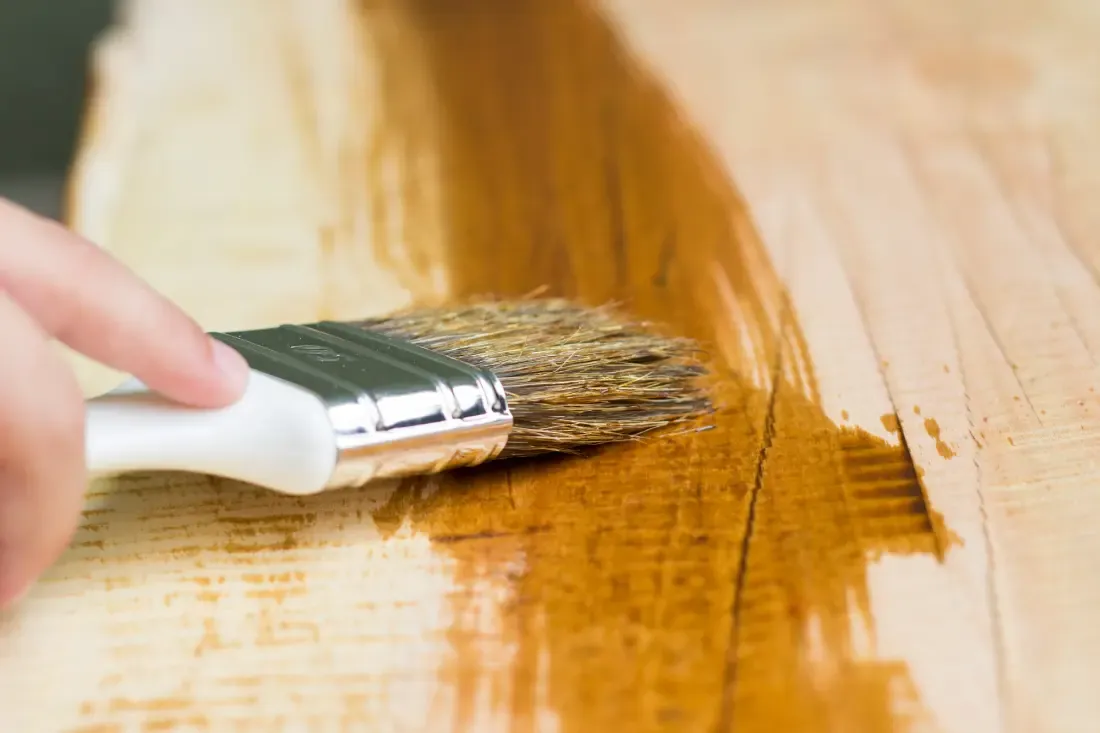
There are three clear finishes you are likely to find on timber furniture, doors and joinery in Sydney: French polish, lacquer and polyurethane. They look different, they wear differently and they are repaired differently. This guide explains each one, so you know what you have and what to ask for. We French polish by hand, and we tell you when another finish suits the piece better.
French polish
French polish is shellac, a natural resin, dissolved in alcohol. We apply it by hand with a cloth pad in many thin coats. The finish is thin, so it shows the grain and the colour of the timber. It is the finish used on most antique furniture.
Its weak points are heat, water and alcohol. A hot dish leaves a white ring. A glass of wine or a splash of hand sanitiser can soften it. Its strong point is repair. New shellac dissolves into the old finish and blends with it, so a mark can be repaired without redoing the whole surface.
Lacquer
Lacquer is sprayed, dries fast and is common on factory-made furniture and joinery. There are two main kinds. Older nitrocellulose lacquer can be blended like shellac, because new lacquer softens the old. Modern catalysed lacquers are harder and more resistant, but a damaged spot does not blend in as easily.
Polyurethane
Polyurethane forms a hard plastic film on top of the timber. It is brushed or sprayed on, and it stands up better than the other two to heat, water and scratches. That is why it is used on floors, benchtops and tables that get heavy use. Thick coats can look flat and plastic. A damaged spot is hard to blend, so a repair often means re-coating the whole area. The 2-pac finish on many kitchen cabinet doors is a polyurethane, and we cover those on our kitchen cabinet repair page.
The three side by side
| French polish | Lacquer | Polyurethane | |
|---|---|---|---|
| How it looks | Warm, thin, shows the grain | Clear, from satin to gloss | Hard film, can look plastic when thick |
| Heat, water and alcohol | Marks easily | Better, depends on the type | Best of the three |
| How it goes on | By hand with a pad, many thin coats | Sprayed | Brushed or sprayed |
| Repairing a mark | Blends into the old finish | Nitrocellulose blends, catalysed is harder | Usually the whole area is re-coated |
| Best for | Antiques, fine furniture, doors, panelling | Factory furniture and joinery | Floors, benchtops, tables in heavy use |
How to tell which finish you have
On site we test a hidden spot, like the underside of a table top or the inside of a door edge. We put one drop of methylated spirits on it. If the finish goes soft and sticky within a minute or two, it is shellac. If nothing happens, it is lacquer or polyurethane. If you test it yourself, use a hidden spot and wipe it off straight away.
Two other clues help. Old shellac tends to go dark and crazed with age. Polyurethane tends to chip and peel in flakes when it fails.
Which finish we recommend, and where
- Antique and inherited pieces: French polish. It is usually the finish the piece was made with, and it keeps the look of the timber.
- Dining tables: French polish if the table is used with coasters and mats. A harder finish if it takes hot dishes and wet glasses every day.
- Timber kitchen benchtops in daily use: a harder finish. Shellac does not stand up to hot pans.
- Doors, staircases and panelling: French polish or a match to the finish that is already there, so repairs blend in later.
- Outdoor timber: none of the three. Shellac does not stand up to rain and sun, and we use other finishes outside.
Send us a photo of the piece and tell us how it is used. We reply with a fixed written quote within one business day, with the finish we recommend and why.