
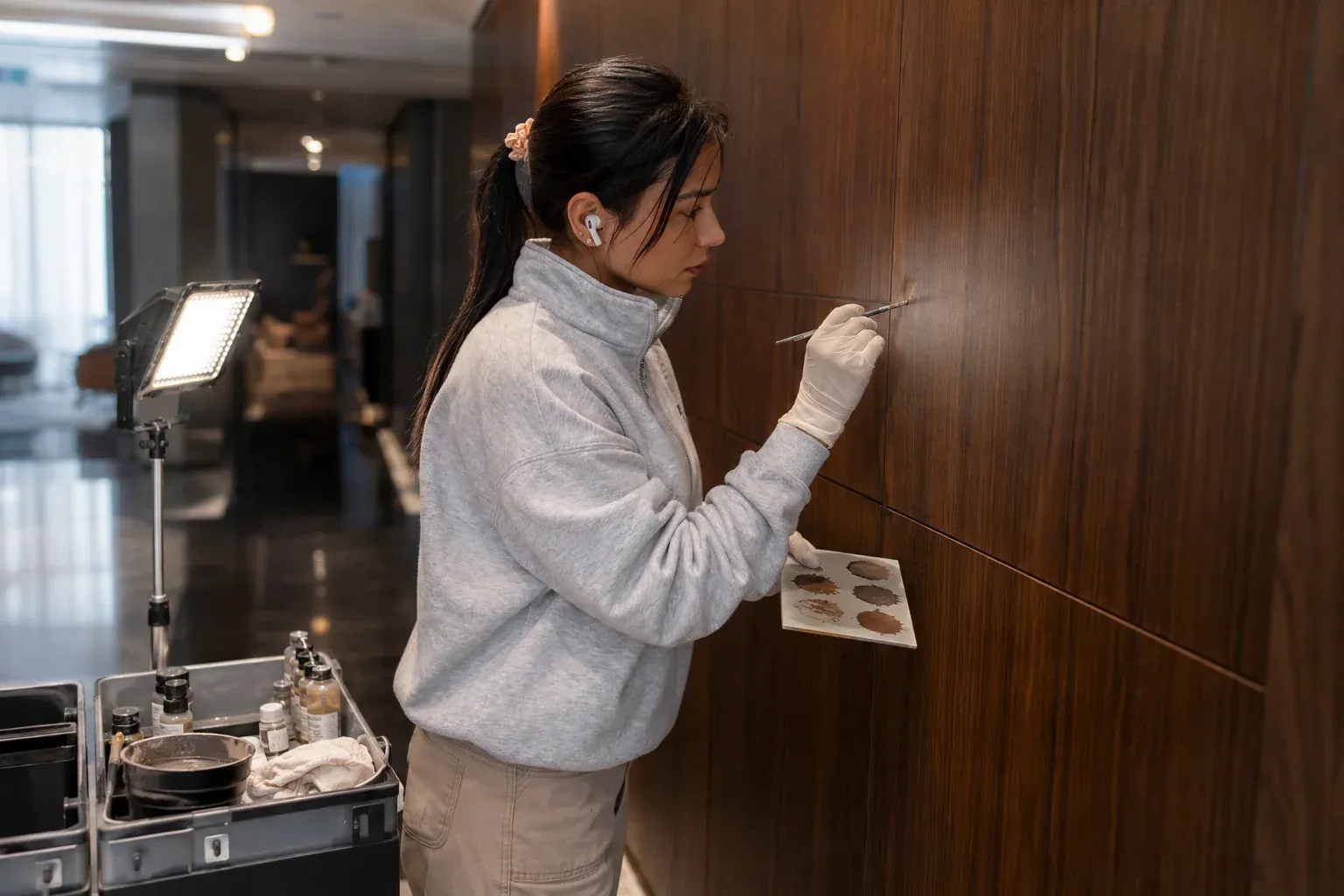
Yes, in most cases. French polish is one of the easiest finishes to repair, and that is one of the reasons we use it. This guide explains why, what we can fix without stripping the piece, and when a full re-polish is the better answer. It comes from our French polishing and timber furniture repair jobs across Sydney.
Why shellac is easy to repair
French polish is shellac dissolved in alcohol. When we apply new shellac over old shellac, the alcohol softens the old finish and the two become one layer. That means a repair does not sit on top as a patch. It blends into the finish around it. Harder finishes like polyurethane do not work this way, which is why a damaged spot on them often means re-coating the whole area.
What we repair without stripping the piece
- Light scratches and scuffs in the finish. We cut them back and build new shellac over them.
- White rings and heat marks. We draw out the trapped moisture and re-polish the spot.
- Worn edges and arm rests, where hands have rubbed the finish thin. We colour the bare timber back and re-polish.
- Dull or cloudy patches from cleaners or wear. We clean the surface and bring the shine back to match.
- Small chips in the finish, where a knock has taken a flake of shellac off.
When a full re-polish is the better answer
A repair works when the finish around the damage is sound. A full strip and re-polish is the better answer when:
- the finish is crazed with fine cracks across the whole surface;
- it is flaking, lifting or sticky all over;
- someone has put polyurethane or a hardware store varnish over the shellac;
- the damage covers most of the top, like years of scratches from daily use.
We tell you which one your piece needs from a photo, and we say so before you spend anything.
What makes a repair harder
| Situation | Why it is harder |
|---|---|
| Silicone spray polish used for years | It leaves a film that stops new shellac from bonding. We have to clean it off first |
| A previous repair with a different finish | The other finish has to come off before shellac will take |
| Dark water stains in the timber | The stain is below the finish. We treat and colour the timber before we polish |
| Thin veneer | We cannot cut back deep, so the repair needs more care |
How we repair French polish on site
- We clean the surface and remove polish residue.
- We cut back the damage to sound finish.
- We fill and colour anything that reached the timber.
- We build new shellac by hand with a cloth pad, blending it into the old finish.
- We match the sheen to the rest of the piece and check it in daylight.
What not to do before we come
- Do not use spray polish or silicone products on the piece.
- Do not sand the mark. On veneer you can go through in seconds.
- Do not paint over it with a varnish from the hardware store. It makes the repair much harder.
- Do not try the iron or hairdryer tricks from the internet on shellac.
Take a photo of the damage in daylight, with a coin for scale, and one of the whole piece. Send them through and we reply with a fixed written quote within one business day.