
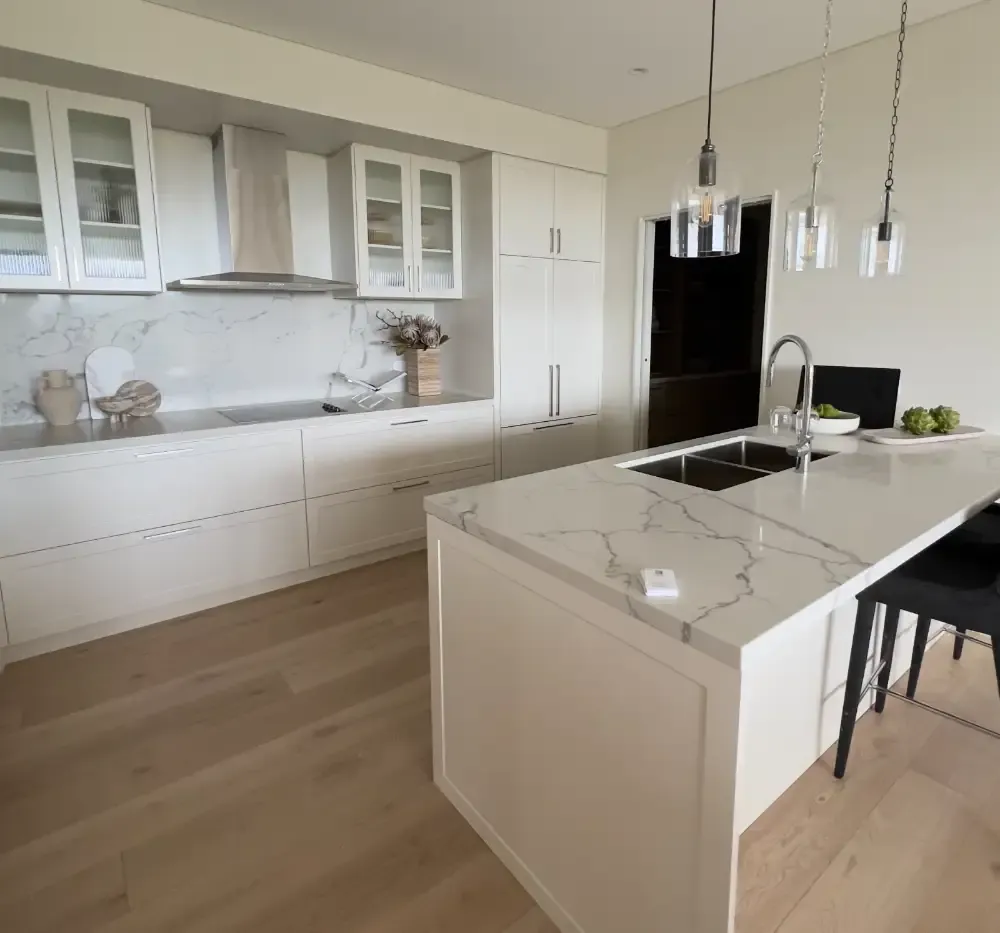
The final inspection is where the bond goes. Most of what agents pick up is surface damage, and most of it can be repaired in one visit before you hand back the keys. This is how we approach it on our end of lease repairs in Sydney.
Start with the entry condition report
Before you book anything, get out the condition report from when you moved in, and your photos. Anything that was already marked, chipped or scratched then is not your cost now. People pay to repair damage they did not cause because they did not check. Do not be one of them.
Fair wear and tear, or damage?
You are not responsible for fair wear and tear. You are responsible for damage. The line is not always obvious, so here is how it usually falls.
| Fair wear and tear (not your cost) | Damage (your cost) |
|---|---|
| Paint faded by sunlight | Holes, dents and gouges in walls |
| Light scuffs in a hallway from normal use | Scuffs from furniture dragged along a wall |
| Carpet worn in a doorway | A burn or a stain on a benchtop |
| Small nail holes from picture hooks (check your lease) | Large holes from shelves and TV mounts |
| A door that sticks from settling | A chipped door edge or a cracked door frame |
| Loose hinges from age | Torn-out hinges and screw holes |
NSW Fair Trading publishes guidance on fair wear and tear and on bond claims. When in doubt, read it, and ask the agent in writing what they consider damage before the inspection.
The items agents pick up most
From our jobs, in rough order.
- Scratched floors. Furniture, pets and chairs without pads. We repair the damaged boards only. The floor does not need sanding.
- Walls. Picture hook holes, dents behind door handles, scuffs from furniture. We fill, sand and colour match the paint on the patch.
- Chipped benchtop edges. Stone and laminate, usually near the sink. We rebuild the chip and match the colour.
- Burn marks on laminate. A pot or an air fryer. We cut out the burn, fill it and paint the pattern back.
- Chipped and scratched cabinet doors. Kitchen, wardrobe and vanity doors. We repair them on their hinges.
- Door frames and skirting. Knocks from moving furniture. We rebuild the edge and colour match it.
- Chipped tiles. One tile, fixed in place, no re-tiling.
All of these are repaired on site, and most are done in a single visit.
Why repair before the inspection, not after
If the agent finds the damage, they price the fix. Their price is often a replacement, and the deduction comes off your bond. You do not control the quote and you do not choose the trade.
If you repair first, you get a fixed written quote per item and you choose what to fix. The property is handed back the way it was handed over, and you have an invoice that shows it. That is a very different inspection.
What to do this week
- Walk through with the entry report and mark what is new.
- Photograph each item. One close up with a coin for scale, one from further back.
- Send us the photos with your inspection date.
- Get a fixed written quote per item within one business day and decide what to fix.
- Book the visit a week or more before the inspection.
We do not clean or paint whole rooms. We repair surfaces. For a full repaint, a painter is cheaper, and for cleaning, a cleaner is. For everything on the list above, send us the photos.